01 · SCIENCE
A six-country project maps routes to resilient water and soil
Blue Transition, led by Germany’s LIAG, reports lessons from 16 pilot regions in six countries. Its report highlights land-use change, healthier soil and diversified water as climate-resilience levers; local approaches vary.
Why it matters: The project points to locally tailored choices for managing water and soil as climate pressures grow; the pilots do not establish one solution for every region.
Read at Phys.org ↗
02 · TECHNOLOGY
Greece’s prime minister says governments are behind on AI questions
Greek Prime Minister Kyriakos Mitsotakis told TechCrunch no government has answers to many AI questions. In San Francisco he described part of his trip as fact-finding while also promoting Greece to technology businesses.
Why it matters: The remarks put a national leader’s uncertainty about AI governance alongside a pitch to attract technology investment; they are an interview, not a policy announcement.
Read at TechCrunch ↗
03 · JUSTICE
Sri Lanka court sentences 15 men over 2019 Easter bombings
A Colombo High Court bench convicted 15 men in the 2019 Easter bombings case and imposed 200-to-260-year prison terms, DW reports. Nine defendants were acquitted; the convicted men can appeal to the Supreme Court.
Why it matters: The verdict is a major legal outcome in a mass-casualty case, while the reported right of appeal means the process may continue.
Read at DW ↗
04 · BUSINESS
Oil prices dip after U.S.-Iran talks raise hopes of diplomacy
Oil fell after U.S. and Iranian officials held talks alongside a U.N. meeting. CNBC reported Brent down 1.15% at $98.11 and U.S. WTI down 1.75% at $88.94 a barrel. It linked the move to diplomacy hopes; no deal was reported.
Why it matters: The price move shows how quickly energy markets can react to diplomatic signals, even before any agreement changes supply.
Read at CNBC ↗
05 · CLIMATE
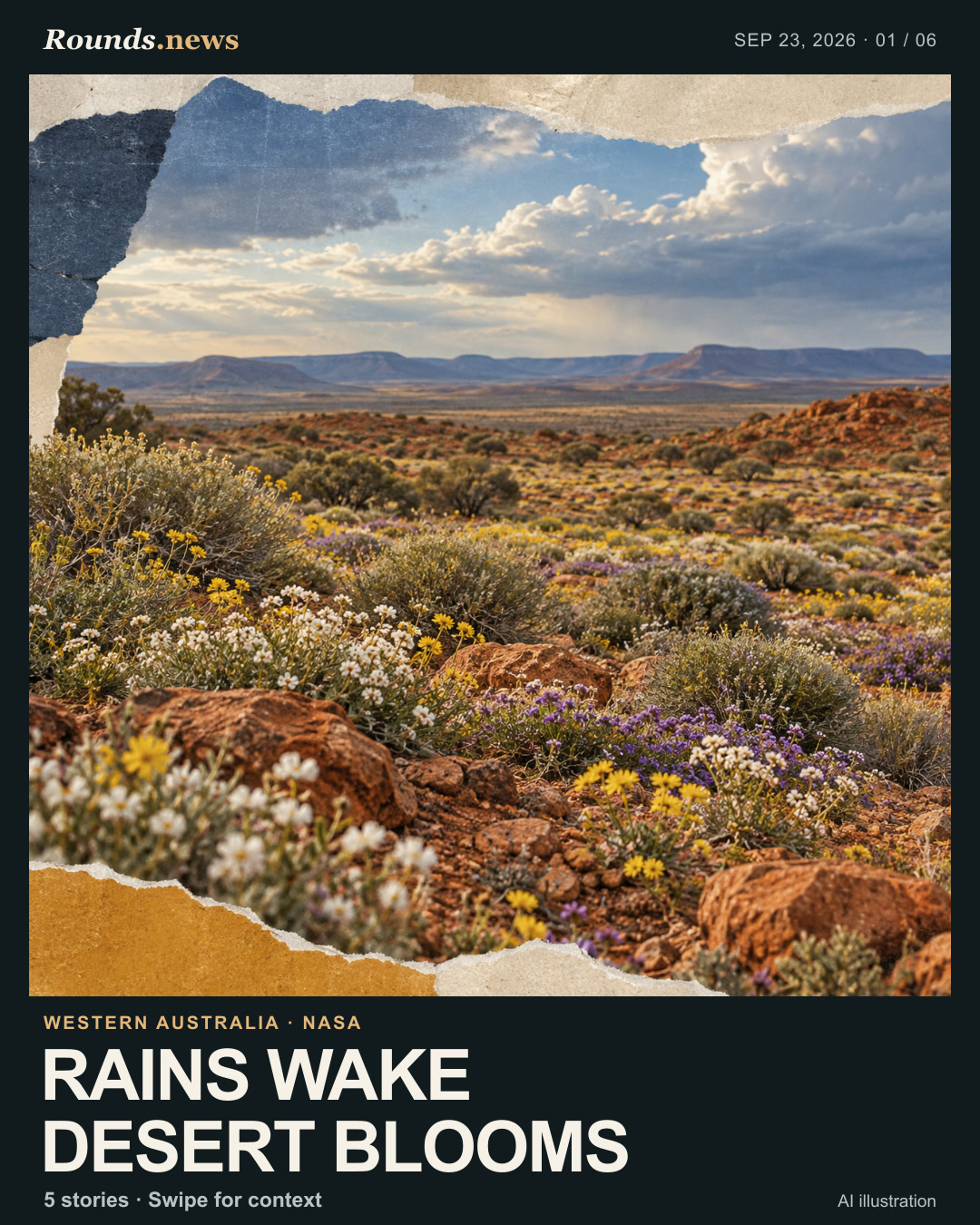
Winter rain fuels a striking wildflower season in Western Australia
NASA Landsat imagery compares Western Australia’s Murchison region in 2026 and 2025. Above-average winter rain helped trigger widespread blooms. Local experts say it may be the area’s strongest wildflower display in nearly two decades.
Why it matters: A vivid seasonal bloom reflects how rainfall can reshape dry landscapes, while NASA notes the region’s wider work includes grazing and a radio-astronomy observatory.
Read at NASA ↗